Grading & Landscape Drainage Experts
“Turn Your Dreams Into Reality!”
Who Do I Call to Install a French Drain? (And Why It Probably Isn’t Your Handyman)
It’s raining again. You’re standing at your back window, coffee in hand, looking out at the yard. But you’re not looking at the beautiful grass or the garden you planted last spring. You’re looking at the stagnant pool of water that has taken up residence right next to your foundation.
Maybe the middle of your yard has turned into a marsh that your dog refuses to walk in. You know you need a solution. You’ve searched Google. You’ve heard the term “French drain” thrown around dozens of times. It sounds fancy, but it’s actually a fairly simple concept: a trench, some gravel, and a perforated pipe designed to move water from point A to point B.
The hard question is: Who do you call to install it?
While searching you’re going to see a lot of options. Plumbers? Landscapers? General contractors? That guy who posted a flyer on your mailbox offering “Odd Jobs & Hauling”?
Here is the honest truth. You shouldn’t call any of them. You need to call an Experience drainage industry professional who understands your pain points and the solutions to relieve them.

The Problem with the “Jack of All Trades”
When you have a toothache, you don’t go to a general practitioner; you go to a dentist. When your car transmission blows, you don’t take it to a guy who specializes in changing tires, or at least we hope you don’t.
Drainage is a trade. It is a specific skill set that sits comfortably between landscaping and civil engineering. The problem is that many homeowners assume that because a French drain involves dirt and digging, any landscaper can do it. Or, because it involves pipes, a plumber is the right fit.
While a landscaper might make your yard look beautiful on the surface, they don’t always understand what is happening underneath the soil. Water dynamics are complicated. Understanding how different soil types (like heavy clay versus sandy loam) react to saturation requires experience.
A general handyman or an inexperienced installer often looks at a French drain as a digging project. They think, “I dig a hole, I throw in a pipe, I cover it up.”
A drainage professional, however, looks at it as a math problem. They are calculating volume, velocity, and trajectory. They aren’t just hiding water; they are managing a force of nature.
The “Hardware Store” Trap
One of the biggest reasons you need a specialist comes down to the materials being used. This is where the difference between a “cheap fix” and a “permanent solution” really becomes obvious.
If you walk into a big-box hardware store on a Saturday morning, you’ll see aisles of black, corrugated pipe. It’s cheap. It’s flexible. It’s easy to throw in the back of a pickup truck.
Inexperienced installers love this stuff. They will buy the “all-in-one” kits where the pipe comes pre-wrapped in a thin, flimsy sock filled with Styrofoam peanuts or lightweight gravel. It looks convenient. It claims to be easy.
Here is what they don’t tell you.
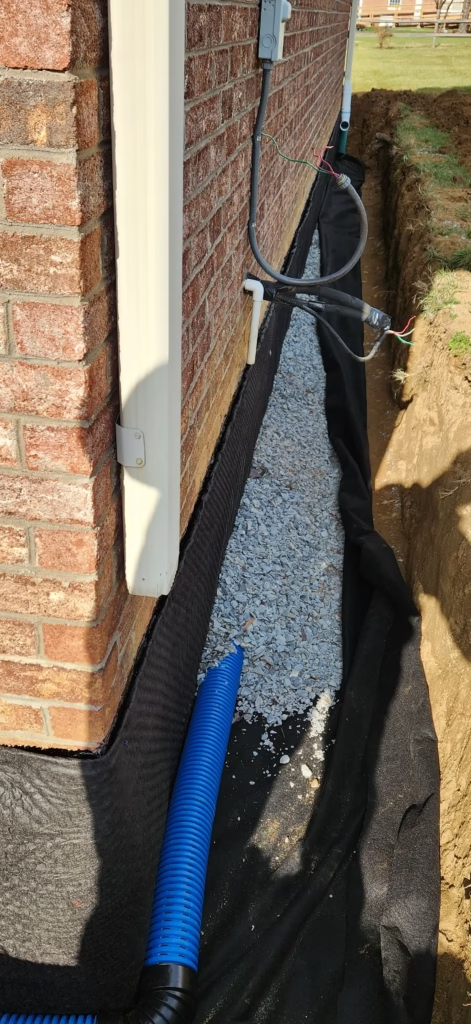
Those hardware-grade products are often not designed to withstand the crushing weight of wet earth over time. When soil gets saturated, it gets heavy. Really heavy. Thin, hardware-store plastic can compress, turning your nice round pipe into a flat oval. Once that happens, the flow stops.
Furthermore, that “sock” wrapped around the pipe? In many cases, the fabric is not the right density for your specific soil type. If the fabric is too tight, water can’t get in fast enough during a heavy downpour. If it’s too loose, or if the installer doesn’t use the right aggregate stone around it, fine sediment enters the pipe.
Over a year or two, that sediment builds up. Eventually, you have a pipe full of mud. Now you have a buried piece of plastic doing absolutely nothing, and you still have a swamp in your yard. A drainage professional knows better. They use heavy-duty, commercial-grade materials that you usually can’t find on the shelf at the local home improvement store. They use rigid pipes or high-grade HDPE corrugated lines that can take a beating and keep flowing for decades.
The Science of the Slope
Let’s talk about gravity. It seems simple enough: water flows downhill.
But in a flat yard, finding “downhill” is an art form.
When an inexperienced installer digs a trench, they are often “eyeballing” it. They might dig a trench that looks straight and deep, but if the bottom of that trench has high spots and low spots, you are going to have problems.
If the pipe has a “belly” (a low spot), water will sit there. Standing water in a pipe breeds mosquitoes and collects debris. Even worse, if the installer gets the pitch wrong, they might accidentally create a slope that flows back toward your house. Instead of a drain, they’ve just built a moat that funnels rainwater directly to your foundation.
This is where the Professionals come in.
A company like Fusion Grading & Drainage doesn’t just guess. They use professional laser guided equipment, to ensure the grade is perfect. We’re talking about precision to the fraction of an inch.
They ensure that the water is constantly moving away from your property at the correct velocity. If the water moves too slow, sediment drops out and clogs the pipe. If it moves too fast (in certain scenarios), it can cause erosion at the discharge point. It’s a balancing act that requires the right gear.
Foundation Issues Are Not a DIY Experiment
The stakes are high. If you mess up a flower bed, you can just replant the flowers. If you mess up a drainage system, you risk the structural integrity of your home.
When water pools against a foundation, it creates hydrostatic pressure. That water pushes against your concrete walls. Eventually, it will find a way in. It might start as a hairline crack. Then it becomes a damp spot in the basement and next thing you know the water begins to flow. Then, the mold begins.
By the time you smell the musty odor of mildew, the damage is already done.
Hiring a generalist to protect your foundation is a gamble. They might not understand how to seal the system properly or where to discharge the water so it doesn’t just loop back to the house.
Fusion Grading & Drainage understands the relationship between your yard and your foundation. They know that a French drain isn’t just about drying out the grass; it’s about protecting the biggest investment of your life. They can assess if you need waterproofing on the exterior walls, or if a simple curtain drain will suffice. They provide a comprehensive solution, not just a band-aid.
What a Professional Install Looks Like
So, what happens when you call the right people?
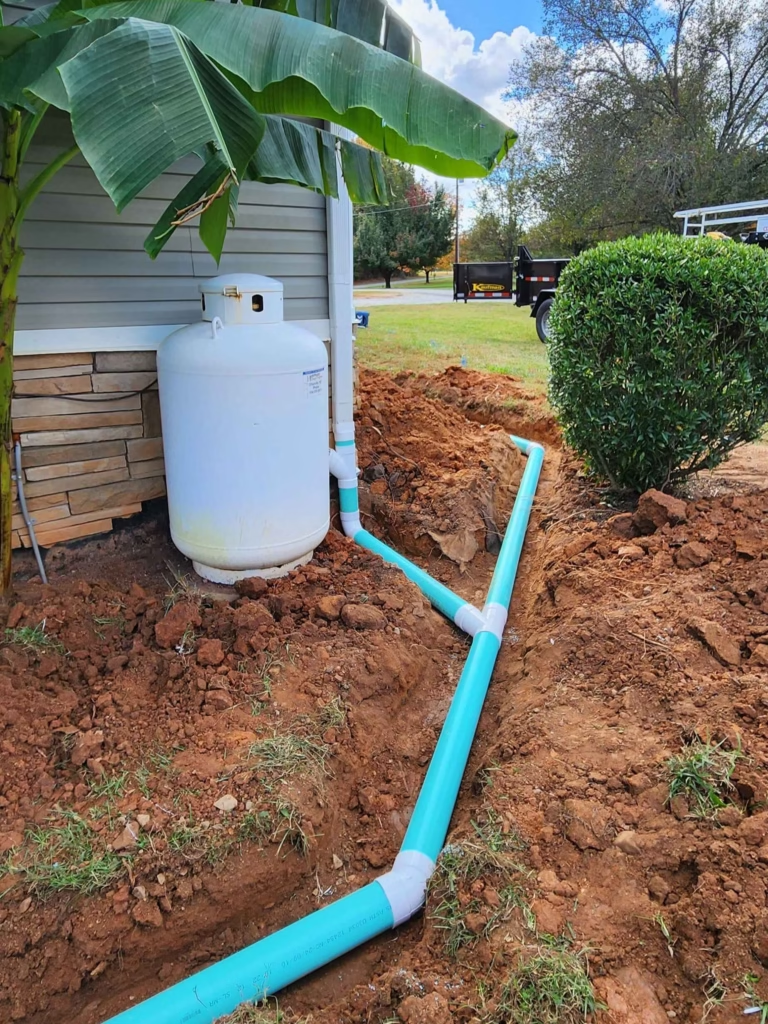
When you hire an experienced team, the process is different from the start. They don’t just start digging. They assess the topography. They look at where your gutters are draining. They look at your neighbor’s yard to see if their runoff is affecting you.
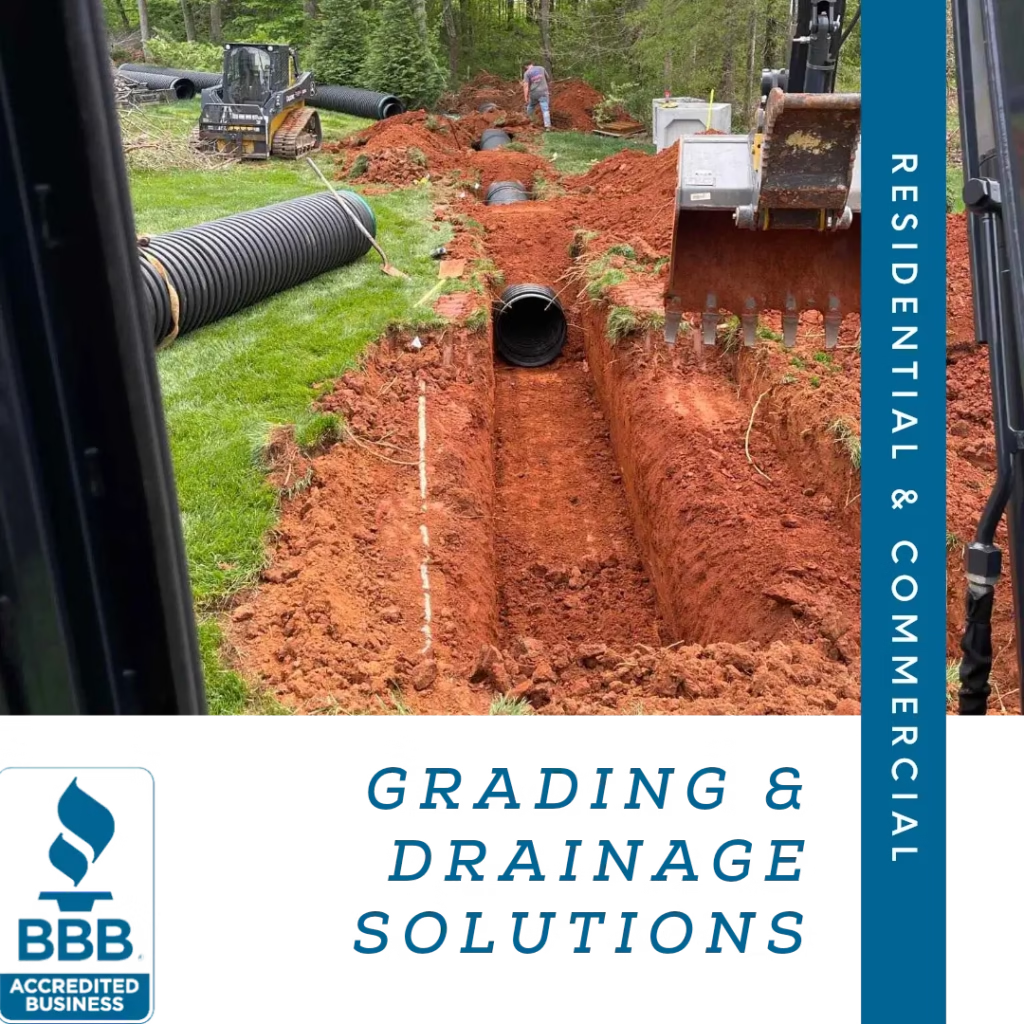
When the work starts, they protect your property. Digging a trench involves moving a lot of earth (soil displacement). An amateur leaves a mountain of clay in your driveway and ruts in your lawn. A professional team manages the mess. They use ground protection mats to protect the grass from heavy machinery. They haul away the excess dirt.
Most importantly, they use the right “recipe” for the drain. It’s not just dirt and pipe. It involves lining the trench with the correct geotextile fabric, one that separates the soil from the stone but allows water to pass through freely. They use washed, crushed stone (not random gravel with stone dust that clogs the holes). They install cleanouts so the system can be maintained and flushed in the future.
Yes, cleanouts. If your installer doesn’t put in an access point to snake or flush the drain later, they are setting you up for failure. Fusion Grading & Drainage builds systems meant to last, and that means making them serviceable.
The Peace of Mind Factor
There is a distinct feeling of anxiety that comes with a heavy thunderstorm when you know your yard has drainage issues. You find yourself watching the forecast, worrying about the basement, wondering if you need to go out in the rain to check the sump pump.
You don’t want to pay for a job twice. That is the reality of hiring the “cheap” option first. We see it all the time. A homeowner hires a handyman to put in a drain for $1,500. It fails in six months. Then they have to pay a professional to come in, dig up the failed hardware-store pipe, haul it to the dump, and install the system correctly. Save yourself the headache.
When you ask, “Who do I call to install a French drain?” the answer is someone who eats, sleeps, and breathes drainage. You want a company that understands hydraulic pressure, soil composition, and laser-precise grading.
You want Fusion Grading & Drainage.
Don’t let your yard be a swamp for another season. Call the pros who have the tools, the commercial-grade materials, and the know-how to fix it for good. Let it rain, we’ve got you covered!

“No matter the size of your project, Our commitment to each client remains the same”
Cabarrus County, North Carolina
- Concord NC
- Harrisburg NC
- Kannapolis NC
- Mount Pleasant NC
- Midland NC
- Locust NC
Rowan County, North Carolina
- Kannapolis NC
- Salisbury NC
- Rockwell NC
- Spencer NC
- China Grove NC
- Landis NC
- Gold Hill NC
- Faith NC
- Granite Quarry NC
- Cleveland NC
Mecklenburg County, North Carolina
- Charlotte NC
- Matthews NC
- Pineville NC
- Mint Hill NC
- Cornelius NC
- Davidson NC
- Huntersville NC
Iredell County, North Carolina
- Mooresville NC
- Lake Norman NC
- Troutman NC